










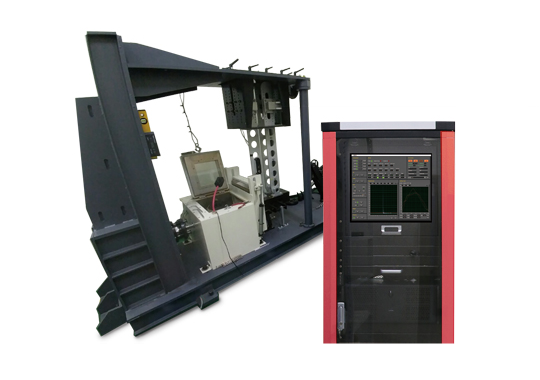
Impact Tester
The Impact Tester is used to evaluate the impact resistance of materials. The toughness and brittleness of materials can be determined by fracturing a specimen and measuring the energy it can withstand until it fractures. This equipment can be fabricated in either mechanical or hydraulic configurations. The mechanical impact tester takes the form of a pendulum and is mounted with an anti-rebound device to enable simulation of impact according to the actual load. The hydraulic impact tester can test high loads with more precise impact control than the mechanical type.
Features
-

Test frame equipped with a belt drive and electrical system
-

User-friendly control system with automatic angle measurement
-

Modular crosshead for quick and safe weight replacement
-

Software for detailed impact performance data acquisition, analysis, and reporting.
- Simultaneous sampling of speed, acceleration, and impact at 2 MHz
-
Optional anti-rebound device and environment chamber
Specifications
| Mechanical | Hydraulic | |
|---|---|---|
| Impact speed | Max. 6.0 m/s | Max. 10.0 m/s |
| Acceleration | Max. 100 ~ 3,000 m/s2 | Max. 100 ~ 3,000 m/s2 |
| Pulse duration range | 1 ~ 100 ms | 1 ~ 100 ms |
Accessory: Heater
| Mechanical | Hydraulic | |
|---|---|---|
| Electric power | 6 kW | 12 kW |
| Voltage | 380 Vac, 1 Phase | 380 Vac, 3 Phase |
| Temperature | Max. 400℃ (±5℃) | Max. 400℃ (±5℃) |
| Heating rate | 10℃/min | 10℃/min |
Customized fabrication available according to customer requirements.
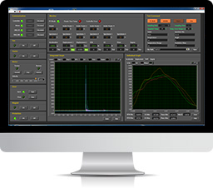
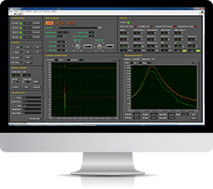
UI Design
Track records

- KNFC